Address
C-181, C Block, Sector-63, Noida, Gautam Budha Nagar, Uttar-Pradesh, 201301, India
Work Hours
Monday to Friday: 7AM - 7PM
Weekend: 10AM - 5PM
Address
C-181, C Block, Sector-63, Noida, Gautam Budha Nagar, Uttar-Pradesh, 201301, India
Work Hours
Monday to Friday: 7AM - 7PM
Weekend: 10AM - 5PM
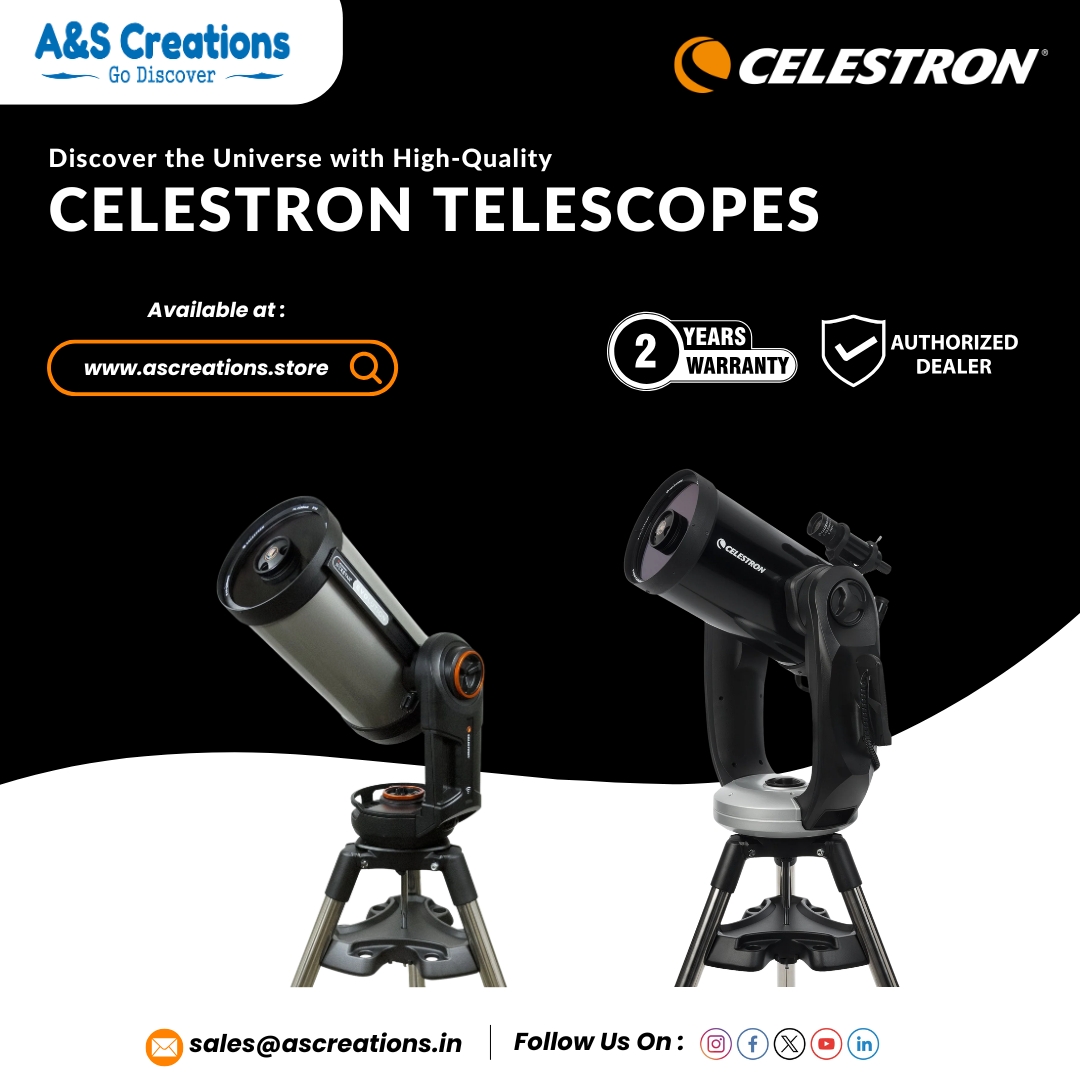
Looking at the night sky can be a fascinating experience, whether you are seeing the Moon through a telescope for the first time or trying to locate distant planets and brighter deep-sky objects. The right telescope can turn casual stargazing into a hobby that encourages curiosity, patience and a deeper interest in astronomy. For beginners, families, students and experienced sky watchers, choosing dependable optical equipment is an important part of that journey.
Among the many telescope brands available today, Celestron has built a strong reputation in the field of astronomy equipment. Celestron Telescopes are available in different configurations, sizes and optical designs, making it possible to find an option suited to different levels of experience and observing goals.
If you are planning your next night-sky adventure, understanding what to look for before buying a telescope can help you make a more confident decision.
The unaided human eye can reveal thousands of stars under a dark sky, but many celestial objects remain too distant or faint to observe clearly. A telescope collects light through its objective lens or mirror and allows you to examine selected objects at greater magnification.
The Moon is usually the easiest starting point. Its craters, mountains and changing shadows can become much more interesting when viewed through suitable optics. With the right equipment and observing conditions, you can also explore planets, star clusters and other brighter celestial objects.
A telescope is therefore more than a magnifying device. It is a tool that helps observers learn how celestial objects appear, move and change over time.
Celestron has been associated with amateur and professional astronomy equipment for decades. Its telescope range includes models designed for different observing styles, from straightforward beginner setups to more advanced systems.
One reason the brand attracts astronomy enthusiasts is the variety of choices. Instead of expecting every user to need the same specifications, Celestron provides different optical designs and telescope configurations.
This is particularly useful for first-time buyers. Someone interested mainly in the Moon may have different requirements from an enthusiast who wants to observe planets or explore brighter deep-sky targets.
Buying a telescope should not be based only on the highest magnification mentioned on a product page. Several other specifications have a major influence on the actual observing experience.
Aperture refers to the diameter of the telescope’s main optical component. In simple terms, a larger aperture can collect more light, which can help reveal finer details and fainter objects.
However, a larger telescope can also be heavier and less convenient to transport. For beginners, a balance between optical capability, portability and ease of setup is often more useful than simply choosing the largest aperture available.
Focal length influences the magnification achievable with different eyepieces. Higher magnification can be useful for observing details on the Moon and planets, but extremely high magnification is not automatically better.
Atmospheric conditions, telescope quality and stability also affect what you can actually see. A telescope that provides a sharp and stable image at practical magnifications can offer a much better experience than one selected solely because it advertises very high power.
The telescope optical tube gets most of the attention, but the mount is equally important. If the mount vibrates every time you touch the telescope, focusing and observing can become frustrating.
A stable mount helps keep the target in view and makes manual adjustments easier. Beginners should consider the overall setup rather than evaluating the telescopes tube alone.
Think about where you plan to use your telescopes. If you have a suitable observation spot at home, a larger setup may be practical. If you regularly travel outside the city to escape light pollution, portability becomes much more important.
A telescope that is easy to assemble, transport and use is more likely to become part of your regular routine.
The objects visible through a telescope depend on the telescopes specifications, location, weather, atmospheric conditions and light pollution.
The Moon is one of the most rewarding targets for beginners. Its surface contains visible craters, ridges and shadows, particularly around the line separating the illuminated and dark portions of the lunar surface.
Because the Moon is bright and relatively close, it is an excellent first target for learning how to focus and position a telescope.
Bright planets can provide exciting observing opportunities. Depending on the equipment and conditions, observers may be able to identify features such as Jupiter’s prominent cloud bands and its four large Galilean moons. Saturn is particularly popular because its rings can become visible through suitable telescopes.
Venus, Mars and other planets can also be observed, although their appearance varies according to their position in the sky and current observing conditions.
Once you become comfortable with basic observation, you can move beyond the Moon and planets. Some star clusters and brighter deep-sky objects can be fascinating targets from darker locations.
Light pollution has a significant impact on these observations. Moving away from brightly illuminated urban areas can make a noticeable difference, especially when looking for faint objects.
Beginners often make the mistake of assuming that astronomy requires complicated equipment. In reality, the best telescopes is one that matches your interests and that you will actually enjoy using.
If you are purchasing your first telescope, consider starting with a setup that is straightforward to operate. Learn how to locate bright objects, focus correctly and understand basic sky navigation before moving toward more advanced equipment.
For experienced observers, factors such as aperture, optical design, mount type and compatibility with different accessories may become more important.
The most suitable Celestron Telescopes option will ultimately depend on what you want to observe, how frequently you plan to use it and whether you need a portable setup.
Even a quality telescope cannot compensate for poor observing conditions. A few simple habits can make your sessions more enjoyable.
First, choose a location with as little artificial light as possible. Give your eyes time to adjust to darkness, and avoid unnecessary bright lights around your observation area.
Check the weather before planning a session. Clouds, humidity and atmospheric turbulence can reduce visibility and image sharpness.
Allow the telescope to settle before making detailed observations, particularly when moving equipment between different temperatures. Take your time while focusing rather than immediately increasing magnification.
Finally, keep a simple observation log. Recording what you saw, where you observed from and the conditions can help you understand the night sky and track your progress over time.
Buying a telescope online makes it easier to compare specifications, telescopes types, prices and intended uses before making a purchase. However, astronomy equipment is a considered purchase, so product information and seller reliability should not be overlooked.
A good ecommerce store should provide accurate specifications, clear product information, proper packaging and dependable customer support. Buyers should also check warranty details and understand what accessories are included with the telescope.
At A&S Creations, our focus is on helping customers explore quality optical and outdoor equipment through an ecommerce shopping experience. If you are searching for a telescope for home astronomy, educational use, family stargazing or a more serious hobby, comparing the available Celestron Telescopes according to your actual requirements can help you choose more wisely.
Astronomy does not require you to know everything about the universe before you begin. It starts with curiosity and the willingness to look up.
A telescope can make that experience even more rewarding by revealing details that are impossible to appreciate with the naked eye. From the changing surface of the Moon to the rings of Saturn and distant star clusters, every observing session can offer something new.
Before purchasing, focus on the factors that genuinely matter: aperture, optical design, mount stability, portability, intended targets and ease of use. Avoid choosing a telescope simply because a specification sounds impressive.
For anyone ready to explore the night sky, Celestron Telescopes offer a range of options worth considering. With the right model, a clear evening and a little patience, your next night under the stars could become the beginning of a lifelong interest in astronomy.
Yes. Celestron offers telescope models with different configurations, including options suitable for people who are beginning their astronomy journey. Beginners should choose a model based on ease of use, intended targets, portability and budget.
Depending on the telescope, observing conditions and location, you may be able to view the Moon, planets, star clusters and some brighter deep-sky objects. Darker skies generally provide better conditions for observing faint targets.
Aperture, focal length, optical design, mount stability and portability are important factors. Instead of focusing only on magnification, consider how these specifications work together for your intended observing activities.
Yes, but urban light pollution can reduce visibility of faint stars and deep-sky objects. Bright targets such as the Moon and some planets can still be excellent choices from many city locations.
Start by deciding what you want to observe and where you will use telescopes. Then compare aperture, optical design, mount type, portability, included accessories and warranty. Choosing according to your actual observing needs is more important than simply selecting the most powerful model.