Address
C-181, C Block, Sector-63, Noida, Gautam Budha Nagar, Uttar-Pradesh, 201301, India
Work Hours
Monday to Friday: 7AM - 7PM
Weekend: 10AM - 5PM
Address
C-181, C Block, Sector-63, Noida, Gautam Budha Nagar, Uttar-Pradesh, 201301, India
Work Hours
Monday to Friday: 7AM - 7PM
Weekend: 10AM - 5PM
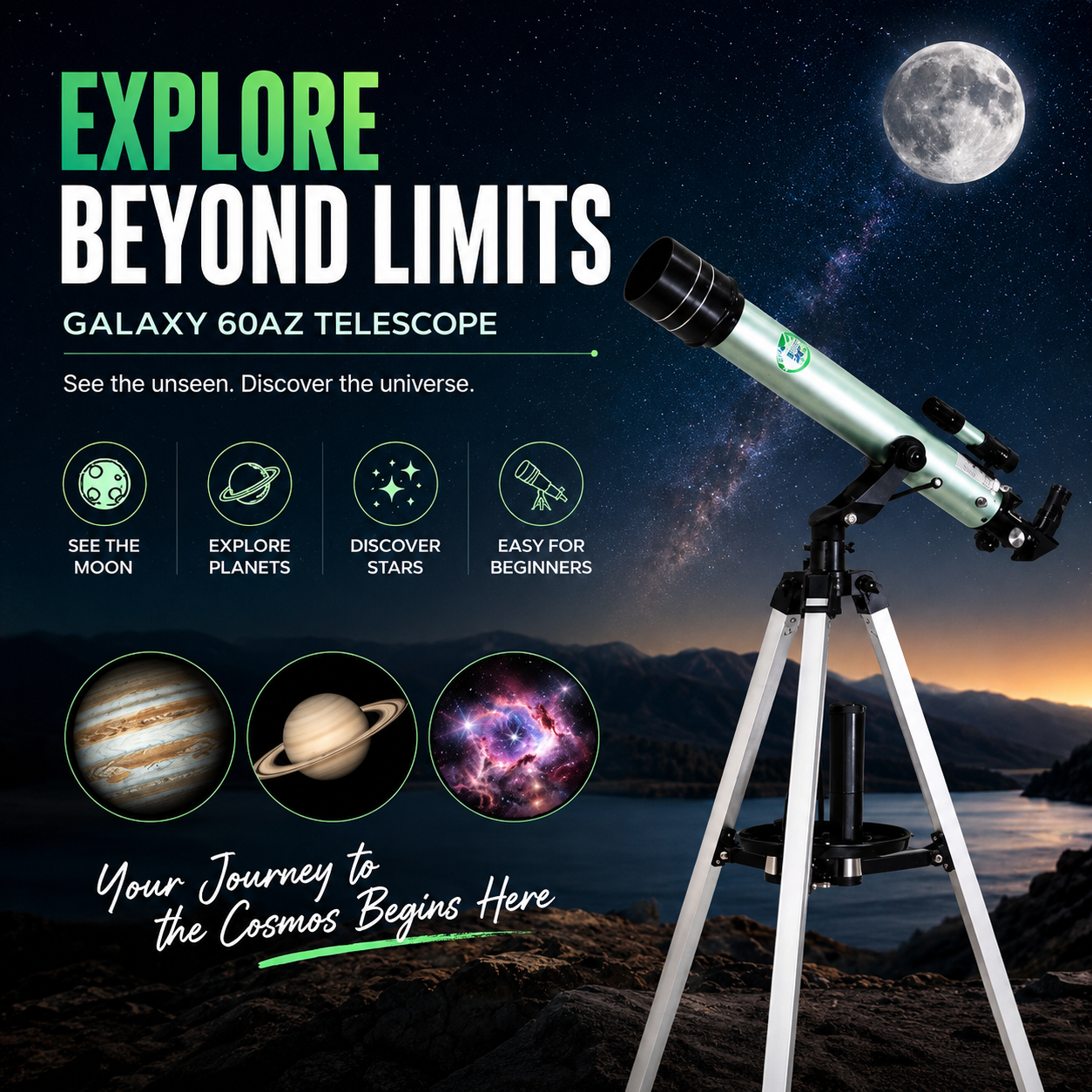
Have you ever looked up at the night sky and wondered what lies beyond the stars visible to the naked eye? The universe is filled with breathtaking celestial wonders, from the craters of the Moon and the rings of Saturn to distant galaxies and sparkling star clusters. Exploring these marvels becomes possible with the right Astronomical Telescopes, whether you are a beginner taking your first step into astronomy or an experienced stargazer seeking deeper views of the cosmos.
Choosing the right telescope is more than simply selecting a product with high magnification. Optical quality, ease of use, mount stability, portability, and overall viewing experience all play an equally important role. This guide will help you understand everything you need to know before investing in one, making it easier to find a telescope that matches your goals and budget.
Astronomy is one of the few hobbies that combines science, education, and relaxation. Every observation session teaches something new about our universe while offering unforgettable experiences.
Modern Astronomical Telescopes allow users to observe:
Unlike basic toy telescopes, quality instruments provide sharp images, better light collection, and smoother tracking, making every observation enjoyable.
A common misconception is that telescope are only for professional astronomers. In reality, today’s o are designed for users of every experience level.
They are ideal for:
Whether your goal is casual Moon viewing or regular night-sky observations, there is a telescope suitable for your needs.
Many first-time buyers focus only on magnification. However, experienced astronomers know that image quality depends on several important factors.
The lens or mirror determines how sharp and bright the image appears. High-quality optics minimise distortion and produce clearer planetary and lunar views.
A larger aperture gathers more light, allowing users to observe fainter celestial objects. This is often more important than extremely high magnification.
A steady mount reduces vibration and keeps objects easier to track across the sky. Smooth controls make observing planets and stars much more enjoyable.
Advanced optical coatings improve light transmission and image contrast while reducing unwanted reflections.
Quality aluminium optical tubes and reliable tripod systems provide years of dependable performance for outdoor observations.
Understanding telescope types helps buyers make better decisions.
Refractor telescopes use precision glass lenses to collect light.
Advantages include:
These are among the most popular choices for families, schools, and first-time users.
Reflector telescopes use mirrors instead of lenses.
They are suitable for:
These combine both lenses and mirrors.
Benefits include:
Many beginners ask whether telescopes really show planets.
With quality Astronomical Telescopes, users can typically observe:
The Moon becomes incredibly detailed, revealing mountains, valleys, craters, and shadows that change every night.
Its colourful cloud bands and four largest moons become visible under good conditions.
Saturn’s rings remain one of the most rewarding sights for any beginner.
During favourable oppositions, surface markings and polar ice caps may become visible.
Objects like the Pleiades and Beehive Cluster appear spectacular through a telescope.
Bright nebulae such as Orion become easier to observe under dark skies.
Even the best telescope performs better with proper observing techniques.
These simple practices significantly improve your observing experience.
Many buyers unknowingly choose telescopes based on misleading advertising.
Avoid these mistakes:
A balanced telescope with quality optics almost always delivers a better experience than one advertising unrealistic magnification.
A well-built telescope provides:
Investing in quality optics ensures years of enjoyable astronomy rather than frustration.
As interest in astronomy continues to grow across India, choosing a trusted supplier becomes just as important as choosing the right telescope. Vanrakshak offers carefully selected telescopes designed to deliver reliable optical performance for students, hobbyists, educators, and experienced skywatchers alike.
Every telescope is chosen with attention to optical quality, durability, and ease of use, helping customers enjoy memorable observations without unnecessary complexity. Whether you’re exploring the Moon for the first time or expanding your astronomy collection, Vanrakshak aims to provide dependable equipment backed by customer support and practical guidance.
By combining quality products with a commitment to education and exploration, Vanrakshak makes astronomy more accessible for everyone who dreams of discovering the night sky.
The universe offers endless opportunities for exploration, and owning the right telescope opens the door to unforgettable experiences. Whether you’re observing lunar craters, watching Jupiter’s moons, or discovering distant star clusters, quality Astronomical Telescopes make every night under the stars meaningful.
Instead of focusing only on magnification, choose a telescope with excellent optics, a stable mount, and durable construction. These features provide a far better viewing experience and allow you to enjoy astronomy for years to come.
If you’re looking for dependable on astronomical telescope that balance performance, quality, and value, Vanrakshak offers a growing range of astronomy equipment suitable for beginners and advanced stargazers alike. Start your journey today and experience the beauty of the universe from your own backyard.
Astronomical Telescopes are designed to observe celestial objects such as the Moon, planets, stars, star clusters, nebulae, and galaxies with greater detail than the naked eye.
A refractor telescope with quality optics, a stable mount, and simple controls is generally the best option for beginners because it is easy to use and requires minimal maintenance.
Yes. A good-quality telescope allows you to observe the Moon, Jupiter, Saturn, Venus, Mars, and other bright celestial objects under suitable viewing conditions.
Yes. Aperture determines how much light the telescope gathers, which has a greater impact on image brightness and clarity than magnification alone.
You can purchase reliable telescopes from trusted astronomy equipment suppliers like Vanrakshak, which offers products suitable for beginners, students, educators, and experienced stargazers.